One of the greatest gifts you can give anyone is the gift of your attention.
Relationships have many levels and depths. You have family members whom you see and talk to on a daily basis, best friends whom you talk to and see on a regular basis, other friends and acquaintances, who colour your mindscape, but with whom you may not have spoken to for a long time. Sometimes when you zoom in on a hazy face, you are flooded with pleasurable memories and you wish you had been in touch with the person. The passage of time may have diminished the prospect of reconnecting, but it will not have corroded your string of connection. Staying in touch would have kept that wonderful relationship alive.
My wife Raji has this story to share:
“During my school days, my father was posted in Mazagaon Dock, Mumbai and we lived in Matunga. My best friend Laxmi, stayed next door to us. Our families were pretty close and we spent many wonderful years together. Later, my father was transferred to Cochin Shipyard and finally we settled in Cochin. With the passage of time and the entanglements of life, we lost touch with them, though whenever we remembered them we did so with a smile in our heart. Recently my father was at a bank, talking to the manager, when a lady standing nearby kept on staring at him quizzically. Dad was perplexed and asked her whether she thought she knew him. The lady broke into tears and said that she was Laxmi. Their family too had moved to Cochin. Being aware that we were in Cochin, they had tried to get our address in vain. They had wanted to meet us but were unsuccessful in their efforts. Her mother had been terminally ill for the past three years and had passed away the previous month. She had always been talking about my mother and wanted to meet her. My dad was shocked. Sadness overwhelmed him. If only we had remained in touch”’ Everyone has a vast network, and yet some people’s networks are largely dormant, while others maintain an active one. It is important that you call your friends and associates occasionally for no particular reason other than to say ‘hi’ and let them know that you’ve been thinking of them. This evokes a sense of happiness in them.
Sometimes, one of your friends may be facing a depression or dilemma or a crisis. All you need to do is contact them and make yourself available as a resource. I know the case of a person who was on the verge of suicide and abandoned it just because a minute before his final mission, a call from a classmate brought ineffable joy in him. Letting someone know that you are available can mean a lot. People often may not know what to ask for, but with good listening and asking skills you may find out enough to know what to offer. Support assumes different forms ‘ a shoulder to cry on, a hand to hold or an ear that listens. Keeping in touch helps reduce the tension and burden of others.
We come across many new faces in our day to day life. A natural rapport or a sense of connection with some of them is also common. You may be left with the feeling that you want to know the person better. All it takes is a telephone call to establish the camaraderie. This can then be cultivated only by staying in touch through regular communication. We are in this ‘Sulekha’ blogworld for quite some time. Yet how many of us are in regular touch with each other and send at least a note when a blogger is not seen active for some time? I was indeed elated by the amazing enthusiasm of some bloggers in chronicling their get-together while attending the marriage of purefriend’s daughter in Coimbatore. I consider it as an exhilarating episode in this virtual realm. How many of us take pains to keep in touch? Staying in touch shows that we care. When we do a good job of staying in touch, we ensure that our current network will be part of our future network, our lifetime network.
Dear Bloggers, Build your network-past, present and future. Don’t be shortsighted or caught up in immediate gratification. Building a support system over a lifetime creates phenomenal results and an incredible sense of joy and fulfillment. Commit yourself to staying in touch. Cultivate the culture of connecting, reconnecting and solidifying your resting relationships.
Let this day of resurrection be a day to resurrect your dormant relationships. Let this be your Easter thoughts.
It is never too late. Your friends are just a phone call, an e-mail, or a doorbell away.
The great historian and author Theodore Zeldin once said
“Conversation is a meeting of minds with different memories and habits. When minds meet, they don’t just exchange facts: they transform them, reshape them, draw different implications from them, engage in new trains of thought. Conversation doesn’t just reshuffle the cards: it creates new cards.”
Effective conversation is an essential part in our relations with other people. It has helped many to create new cards in their personal or professional life. Good talk gets a lot of relationships started. The discovery of common interests, experiences, values and dreams through conversation have fueled many new relationships. It has convinced several couples to take the plunge into commitment to build a successful life together.
The quality and effectiveness of our business skills as well as our social skills in personal relations is also highly determined by the way conversations are carried on. Watching ‘Larry King show’ or BBC’s ‘Hard Talk’ can instruct us the intricacies of this lively art.
Making conversation with someone you have just met doesn’t have to be awkward or difficult. Whether you are in a professional or social setting, the key is to ask engaging questions… pay attention to what the other person is saying… and respond to what’s being said to keep the conversation going
In today’s business world, we will be involved in many conversations with clients, suppliers, authorities, community leaders, etc. Making a good and positive impact on them requires some conversational skills that can and should be learned.
As Francis Bacon rightly said-“Reading maketh a full man, conference a ready man, and writing an exact man”. Here are some conversation techniques that will help us to be a ‘ready man’ in effectively communicating with others. These conversation techniques will make us much stronger in communicating with others. They will also help us to see and to know the humanity in other people and empathize their needs.
• Break the ice with a warm topic.
Saying a warm Hello is a great starter. Open with a cliché and don’t worry that it might sound dull. Clichés are terrific conversation starters, because they are subjects to which everyone can relate.
You cannot go wrong if you pick topics like the weather, sports, politics, movies or any subject that interests most people.
• Ask Open-ended questions Philosopher Montaigne once said “There is no conversation more boring than the one where everybody agrees.” The goal of conversation is to get more specific and better-refined information. To do so, you will have to ask questions that will help you to uncover your counterpart’s needs and wants. The thing that most people want to hear in a conversation is their own voice. You can use this to your advantage by asking opinion type questions. Leave the other person a way to elaborate. After you ask, shut up and listen. Open-ended questions are questions that open up the counterpart and give you the opportunity to continue the conversation. They can make you a hero. An example: “How do you feel about blogging….? What is your opinion about rescheduling meeting hours….?, Do you believe that….?. These are questions that can’t be answered with a “yes” or a “no”. This type of question prompts discussion, because it can’t be answered with a simple yes or no. Since answers will be longer, you will have an opportunity to notice other things that are being said to keep the conversation going. • Be a good Listener and show undivided attention
La Rochefoucauld, the wry French philosopher who wrote the book ‘Maxim’ said – “The extreme pleasure we take in talking of ourselves should make us fear that we give very little to those who listen to us.”
Statistics indicate that the normal, untrained listener is likely to understand and retain only about 50 percent of a conversation. This relatively poor percentage drops to an even less impressive 25 percent retention rate 48 hours later. This means that recall of particular conversations will usually be inaccurate and incomplete.
Many communication problems are attributable to poor listening skills. When someone else is speaking, most people spend that time planning what they themselves are going to say next. This is not only impolite; it can cause you to miss important information.
Listening is just as important to good conversation as talking-maybe even more important. I have never met a good conversationalist who wasn’t a good listener … and I have never learned much while I was talking.
Instead of rehearsing your next clever line while the other person is talking, focus on your genuine response to what he is saying. Challenge yourself to come up with questions about the points the person has raised.
Listening is also a way to show respect for others. Your goal is to create a win/win outcome so that your counterpart will be willing to converse with you again. Thus, your counterpart needs to think you are a fair, honest, and a decent person. This will give him courage to open up further.
• Be interested and not lifeless Conversation is like a tennis game. It needs two players who have to give and take. No game is fun if one player is lifeless or half-hearted about it. This is harder to do than most people realize. Let other people know that you are paying attention to what they are saying by making eye contact frequently. When there are people moving all about, it is easy to let your eyes drift around the room. But doing that gives the impression that you are looking for someone more interesting to talk to, or that what is being said is not holding your interest. Let your gaze move from eye to eye. Pick out the person who hasn’t said much, who looks ill at ease, and make a special point of talking to him.
On the other hand, staring relentlessly into someone’s eyes will also make him uncomfortable. It is fine to take your eyes off the person briefly when it’s your turn to talk. • Do not interrupt when your counterpart is speaking. Interrupting a speaker is not a good business for two reasons. First, it is rude. Second, you may be cutting off valuable information that will help you at a later point. Even if your counterpart is saying something that is inaccurate; let him or her finish. Interruptions can frustrate the speaker and thrash his train of thoughts. • Fight off distractions. When you are conversing, try to create a situation in which you can think clearly and avoid interruptions. Interruptions and distractions tend to prevent conversation from proceeding smoothly or may even cause a setback. Switch off the TV and Music and look at the face of your counterpart. Employees, peers, children, animals, and phones can all distract you and force your eye off the goal. If you can, create a good listening environment. • Be Tactful and Diplomatic. Follow the old adage “Think before you speak” if you want your counterpart want to converse with you again. It is important not only to say the right thing in the right place, but far more difficult is to leave unsaid the wrong thing at the tempting moment. This won’t happen if you avoid offending his or her dignity. When we converse meaningfully, we are trying to exchange a relationship. If you want to react, attack the message and not your counterpart personally. • Don’t get angry. We have often seen some people even trying to hold another by the button or the hand in anger in order to be heard out. The truth is, if people are unwilling to hear you, you had better hold your tongue than them When you become angry, your counterpart has gained control in triggering your response. In the angry mode, you are probably not in the best frame of mind to make the best decisions. Emotions of any kind hinder the listening process. Anger especially interferes with the problem solving process involved in good conversations. When you are angry, you tend to shut out your counterpart. Nothing lowers the level on conversation more than raising the voice. If you are going to get angry, do it for the effect, but retain control of your emotions so you can keep control of the conversation. Remember Nikita Khrushchev, the president of USSR, who pounded his shoe on the table in the United Nations and the effect worked well for him. • Be animated and alert to nonverbal clues. What message are the eyes sending? What message is his or her nonverbal behavior sending? Many experienced conversationalists have found that with careful attention they can tell what their counterpart is really thinking and feeling. Is he or she lying or telling the truth? While the person’s verbal message may convey honesty and conviction, his or her gestures, facial expressions, and tone of voice may convey doubt. Be animated while you talk. Avoiding eye contact may cause what you say to be taken as untruthful. • Be Flexible Topics change, and People, and moods. A good conversationalist change with them. • Be cheerful, relaxed and good humored Have a sincere, friendly smile on your face. Humor can be a wonderful humanizer in conversations. Good conversation is soothing and relaxing. Do not make it strained and stressful. Many can argue, not many converse. The first ingredient in conversation is truth, the next good sense, the third good humor, and the fourth wit. Remember, humor is worth more than wit and easiness more than knowledge • Learn to pause in conversation. Pauses in conversation usually will cause the other person to speak. They will do so because the other person feels awkward and unnatural if you stop saying anything. This technique will cause the person to expand on what he has said or sometimes to recant or rephrase his statement. This is a very powerful tool of conversation. And, if you are in control of the conversation, you can make the pause as long as is necessary. You will also see when someone is using pauses on you. • Avoid being dogmatic and insincere Avoid generalizations such as “All politicians are corrupt”. Moderate your statement. Avoid ‘all’ and ‘always’. Swing over to ‘some’ and ‘sometimes’. Also be sincere in your comments and praising of others. Don’t overdo it • Avert a verbal bashing What some people do in conversation is batter one another with facts and theories gleaned from superficial readings of newspapers, magazines and digests. That will turn a dialogue into an intersecting monologue. • Don’t Monopolize the Conversation There is nothing that exasperates people more than a display of superior ability or brilliance in conversation. They seem pleased at the time, but their envy makes them curse the conversationalist in their heart. Conversation is the art of never seeming bored, of touching everything with interest, of pleasing with trifles, of being fascinating with nothing at all. It is a lively art of darting about with words, of hitting them back and forth, a sort of brief smile at ideas from everyone that makes a conversation memorable • Develop a broad outlook
Good conversationalists keep to the subject, do not repeat themselves, and do not talk of themselves; such men do not listen to their own voice, are cultivated enough not to lose themselves in commonplaces, and possess tact and good taste enough not to elevate their own persons above their subjects. All the best talkers have this characteristic in common.
• Conclude a conversation gracefully.
Breaking away from a conversation is often more difficult that starting one. After bonding with someone, most people hesitate to interrupt when they need to move on because they feel it will hurt the other person’s feelings.
The fact is that there will come a point in any conversation when you have to end it-either to see other people or simply because you have run out of things to say. Making such a move doesn’t have to be hard. You just need a great excuse.
The key to leaving a great impression while leaving a conversation is to make the excuse in a polite, friendly and unapologetic way… and then leave. Good Conversation
Finally, there are three things in conversation that ought to be considered before some things are spoken–the manner, the place and the time. He, who sedulously attends, pointedly asks, calmly speaks, coolly answers, and concludes when he has no more to say, is in possession of some of the best requisites for carrying on a good conversation.
As Water Scott said “The pith of conversation does not consist in exhibiting your own superior knowledge on matters of small consequence, but in enlarging, improving and correcting the information you possess by the authority of others”
The terrain of Toastmasters has taught me some simple rules that any speaker should recognize before speaking to an audience. I thought of presenting it using the mnemonic of 7 C’s. They are as follows.
Commitment
This is a usual problem with many speakers. You commit to a speech and finally procrastinate it or deliver a shoddy product. Both demonstrate lack of commitment. Good communicators commit to speech schedules, commit to time allocated and commit to the objectives of the speech. They demonstrate commitment to the responsibility assigned. They communicate ideas persuasively to elicit emotional commitment of the audience.
Creativity
A creative speaker transforms a mundane subject matter into sublime. There is light and energy in every spoken word even when the topic he dwells on is dreary. The involving examples, stories, deviant narrative style, unconventional organizational techniques,illustrations, humor and surprising revelations, inducing drama and suspense, imparting vocal variety, using down-to-earth comparisons are some ways to induct magic in your speech. Whenever we speak, whether in Toastmasters or not, we sell ourselves. We sell our mannerisms, our style of thinking, our appearance, our emotions and our logic. There may be only seven notes in music, but their creativity is infinite.
Clarity
This could be the most important asset of a good speaker. Good communicators present ideas clearly with no ambiguity in meaning. Avoid information overload. We live in a multi-tasking world. If you throw too much at a human brain, it shuts you off completely; it will absorb neither your content, nor your personality. Speaking requires focus. The hunter who chases two rabbits usually captures neither. Using double negative and ambiguous terminologies and jargons may sound bombastic in writing. But in speaking, they simply put the audience ears offline. Good communicators explain the most complex theories in lucid terms so that even a child can understand. They do it with appropriate pauses and vocal stress. Understanding every piece of information elevates the contentment of audience and boosts their self-esteem. It will also endorse the empathy of the speaker with the audience.
Coherence
Coherence is the glue that holds together all the materials of a speech. All ideas should flow from the speaker in a logical pattern and should be connected by proper transitions. Speakers should avoid inconsistencies and should dwell on a theme rather than digressing with multiple thoughts or themes. Uncontrolled meandering from the subject of your talk projects a scattered image of your speech in the mind of the audience. Lack of focus, weak and vague language, loose connection of ideas and disjointed talk damages the objective and will not be savored by any audience
Conciseness
Conciseness or brevity is the art of making a point with minimum usage of words to give maximum impact. This should be our primary goal as tightening of a draft speech to the bare essentials glistens and cleans our speech imparting it with more power and punch. Good speakers cut, sift, and create speech structures they know will work. “Less is better than more” should be the cannon. Lincoln’s Gettysburg address had just 272 words. Never use three words when you can say it in two. Leave out clichés, junk and hackneyed words, such as “You know,” “OK,” and “All right.” Leave out phrases such as “Let me be honest,” or blunt, or frank. Avoid “In other words…” or “To say it another way…” Speak in short sentences, short phrases, and short words. Word choice should be instantly clear to an audience
Correctness
All the information which a speaker presents should be carefully checked to verify its accuracy and authenticity. While mistakes are always possible, remember that any serious errors will undermine your believability. Correctness of language ensures that attention will be directed toward what the speaker says, not how it is said. Proper use of grammar and correct pronunciation will show that the speaker is the master of the words being used.
Credibility
Aristotle mentions in his “Rhetoric” that credibility is the most important part of the process and without it nothing else mattered. A lawyer talking about “How to prevent a heart attack” has less credibility than a cardiologist talking on the same subject. Credibility in the eyes of the audience is important to invite active listening and positive response. A speaker who adapts anecdotes and projects it as his own personal experience will instantly lose credibility once the truth comes to light. It can affect the speaker’s personality. Honesty communicates credibility while liars lie low in the audience’s judgment. Addressing a medical conference of scientists, a lady opened the speech saying “I am a 32-year-old wife and mother of two. I have AIDS. Please work fast”. She instantly received a standing ovation at the conference. Your appearance, manner of delivery, your response to questions, the examples you cite etc can add or deduct your credibility.
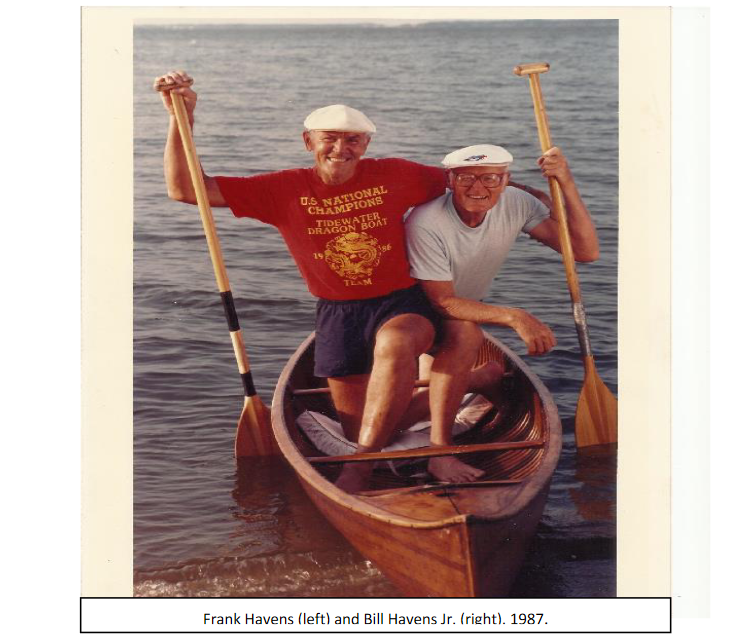
Not many people have heard of Bill Havens. But Bill became an unlikely hero of sorts – at least among those who knew him best. Here is his story: At the 1924 Olympic games in Paris, the sport of canoe racing was added to the list of international competitions. The favorite team in the four-man canoe race was the United States team. One member of that team was a young man by the name of Bill Havens. As the time for the Olympics neared, it became clear that Bill’s wife would give birth to their first child about the time that the US team would be competing in the Paris games.
In 1924 there were no jet airliners from Paris to the United States, only slow ocean-going ships. And so Bill found himself in a dilemma. Should he go to Paris and risk not being at his wife’s side when their baby was born? Or should he withdraw from the team and remain with his family? Bill’s wife insisted that he go to Paris. After all, competing in the Olympics was the culmination of a life-long dream. But Bill felt conflicted and, after much soul-searching, decided to withdraw from the competition and remain home where he could support his wife when the child arrived. He considered being at her side his highest priority – even higher than going to Paris to fulfill his dream. As it turned out, the United States four-man canoe team won the gold medal in Paris. And Bill’s wife was late in giving birth to their child. She was so late, in fact, that Bill could have competed in the event and returned home in time to be with her when she gave birth. People said, “What a shame.” But Bill said he had no regrets. For the rest of his life, he believed he had made the better decision. Bill Havens knew what was most important to him. Not everybody figures that out. And he acted on what he believed was best. Not everybody has the strength of character to say no to something he or she truly wants in order to say yes to something that truly matters. But for Bill, it was the only way to peace; the only way to no regrets.
There is an interesting sequel to the story of Bill Havens. The child eventually born to Bill and his wife was a boy, whom they named Frank. Twenty-eight years later, in 1952, Bill received a cablegram from Frank. It was sent from Helsinki, Finland, where the 1952 Olympics were being held. The cablegram read:
” ‘Dear Dad, Thanks for waiting around for me to get born in 1924. I’m coming home with the gold medal you should have won.’ It was signed, ‘Your loving son, Frank.’ Frank Havens had just won the gold medal in the singles 10,000 meters canoeing event.”
Frank Havens had just won the gold medal for the United States in the canoe-racing event, a medal his father had dreamed of winning but never did. Frank Havens remains the only American Olympic gold medal winner in a singles canoeing event.
Thomas Kinkade eloquently said, “When we learn to say a deep, passionate yes to the things that really matter… then peace begins to settle onto our lives like golden sunlight sifting to a forest floor.”
It is the 1854 Oration given by Chief Seattle, the head of the Suquamish tribe. Its setting is a cold day in December on the shores of an area the Indians called “The Whulge” in the state of Washington. Over a thousand Indians had gathered to await the arrival of a ship carrying Isaac Stevens, who had recently been appointed by President Pierce to serve as Governor of the newly created Washington Territory. When the Ship carrying Governor Stevens arrived, a diminutive man stepped on the shore without any ceremony. He was rough in his manner and direct in his approach as he was appointed to facilitate the settling of the area by removing the native Red Indians so that it would not impede the progress of white settlers. He began speaking in rapid-fire sentences that even the interpreters could not understand.
At the end, the Indians turned towards Chief Seattle. He had long since been recognized as the leader of the Allied tribes of the Whulge. He was a thoughtful man who preferred peace to war. He knew that the Indian’s dreams and visions to live as free people had come to an end. He started speaking with a sense of sadness mixed with contempt and scorn. He chose his words carefully and spoke from the heart. The whole speech has the structure of a eulogy as it mourns the decadence of a great tribe with a distinctive culture and identity.
The version he reproduces here is the authentic version transcribed by Dr. Henry Smith as he sat on the shores of the Whulge, listening to Chief Seattle.
IMHO, this is the most moving eulogy ever spoken by any man, in any century, in any language, in any part of the world.
THE LAST WHISPER
CHIEF SEATTLE’S 1854 ORATION
Yonder sky that has wept tears of compassion upon my people for centuries untold, and which to us appears changeless and eternal, may change. Today is Fair. Tomorrow it may be overcast with clouds.
My words are like the stars that never change. Whatever Seattle says, the Great chief at Washington can rely upon with as much certainty as he can upon the return of the sun or the seasons.
The white chief (Governor Stevens) says that Big Chief at Washington sends us greetings of friendship and goodwill. This is kind of him for we know he has little need of our friendship in return.
His people are many. They are like the grass that covers vast prairies.
My people are few. They resemble the scattering trees of a storm-swept Plain.
The great White Chief sends us word that he wishes to buy our land but is willing to allow us enough to live comfortably. This indeed appears just, even generous. And the offer may be wise also, as we are no longer in need of an extensive country.
There was a time when our people covered the land as the waves of a wind-ruffled sea cover its shell-paved floor, but that time long since passed away with the greatness of tribes that are now but a mournful memory.
I will not dwell on, nor mourn over, our untimely decay, nor reproach my white brothers with hastening it, as we too may have been somewhat to blame.
Youth is impulsive. When our young men grow angry at some real or imaginary wrong, and disfigure their faces with black paint, it denotes that their hearts are black, and that they are often cruel and relentless, and our old men and old women are unable to restrain them.
Thus it has ever been. Thus it was when the white man began to push our forefathers ever westward.
But let us hope that the hostilities between us may never return. We would have everything to lose and nothing to gain. Revenge by young men is considered gain, even at the cost of their own lives, but old men who stay at home in times of war, and mothers who have sons to lose, know better.
Our good father at Washington- for I presume he is now our father as well as yours- sends us word that if we do as he desires he will protect us. His brave warriors will be to us a bristling wall of strength, and his wonderful ships of war will fill our harbors, so that our ancient enemies far to the northward- the Haidas and Tshimshian-will cease to frighten our women, children, and old men.
Then in reality will he be our father and we his children.
But can that ever be?
Your God is not our God! Your God loves your people and hates mine! He folds his strong protecting arms lovingly about the white man and leads him by the hand as a father leads an infant son. But, He has forsaken His Red children-if they really are His.
Our God, the Great Spirit, seems also to have forsaken us. Your God makes your people wax stronger every day. Soon they will fill all the land. Our people are ebbing away like a rapidly receding tide that will never return.
The white man’s God cannot love our people or He would protect them. They seem to be orphans who can look nowhere for help. How can then we be brothers? How can your God become our God and renew our prosperity and awaken in us dreams of returning greatness? If we have a common Heavenly Father He must be partial, for He came to His white children. We never saw Him. He gave you laws but had no word for His red children whose teeming multitudes once filled this vast continent as stars fill the firmament. No, we are two distinct races with separate origins and separate destinies. There is little in common between us.
To us the ashes of our ancestors are sacred and their resting place is hallowed ground. You wander far from the graves of your ancestors and seemingly without regret. Your religion was written upon tablets of stone by the iron finger of your God so that you could not forget. The Red Man could never comprehend or remember it.
Our religion is the traditions of our ancestors -the dreams of our old men, given them in solemn hours of the night by the Great Spirit; and the visions of our sachems, and is written in the hearts of our people.
Your dead cease to love you and the land of their nativity as soon as they pass the portals of the tomb and wander away beyond the stars. They are soon forgotten and never return.
Our dead never forget this beautiful world that gave them being. They still love its verdant valleys, its murmuring rivers, its magnificent mountains, sequestered vales and verdant-lined lakes, and ever yearn in tender fond affection over the lonely hearted living, and often return from the happy hunting ground to visit, guide, console, and comfort them.
Day and night cannot dwell together. The Red Man has ever fled the approach of the White Man, as the morning mist flees before the morning sun.
It matters little where we pass the remnant of our days. They will not be many. The Indian’s night promises to be dark. Not a single star of hope hovers above his horizon.
Sad-voiced winds moan in the distance. Grim fate seems to be on the Red Man’s trail.
A few more moons, a few more winters, and not one of the descendants of the mighty hosts that once moved over this broad land or lived in happy homes, protected by the Great Spirit, will remain to mourn over the graves of a people once more powerful and hopeful than yours.
But why should I mourn at the untimely fate of my people? Tribe follows tribe, and nation follows nation, like the waves of the sea. It is the order of nature, and regret is useless.
We may be brothers after all. We will see.
We will ponder your proposition and when we decide we will let you know. But should we accept it, I here and now make this condition that we will not be denied the privilege without molestation of visiting at any time the tombs of our ancestors, friends, and children.
Every part of this soil is sacred in the estimation of my people. Every hillside, every valley, every plain and grove, has been hallowed by some sad or happy event in days long vanished.
Even the rocks, which seem to be dumb and dead as they swelter in the sun along the silent shore, thrill with memories of stirring events connected with the lives of my people, and the very dust upon which you now stand responds more lovingly to their footsteps than yours, because it is rich with the blood of our ancestors, and our bare feet are conscious of the sympathetic touch.
Our departed braves, fond mothers, glad, happy hearted maidens, and even the little children who lived here and rejoiced here for a brief season, will love these somber solitudes and at eventide they greet shadowy returning spirits.
And when the last Red Man shall have perished, and the memory of my tribe shall have become a myth among the White Men, these shores will swarm with the invisible dead of my tribe.
And when your children’s children think themselves alone in the field, the store, the shop, upon the highway, or in the silence of the pathless woods, they will not be alone
In all the earth there is no place dedicated to solitude. At night when the streets of your cities and villages are silent and you think them deserted, they will throng with the returning hosts that once filled them and still love this beautiful land. The White Man will never be alone.
Let him be just and deal kindly with my people, for the dead are not powerless.
Dead, did I say? There is no death, only a change of worlds.
(Posted below is a Valedictory speech that I gave early this year to a group of school students in the 9-12th grade who had participated in a Youth Leadership program, a well-structured communication and leadership training program lasting 8 weeks , conducted by Global Toastmasters Club in Jubail.)
Dear Club President, Fellow Toastmasters and my dear Youth Leaders
Good Evening!
Let me at the outset congratulate Global Toastmasters for wonderfully orchestrating this Youth Leadership Program that has helped many students to learn the rudiments of public speaking.
Tonight, I wish to share with you two incidents of my school days and a couple of other observations relating to this program.
When I was a grade 6th student, I began a love affair with a beautiful girl in my class. Well, this girl’s mother was a teacher in the school where I studied and was a close friend of my mother , who was also incidentally a teacher there. So, in all my sincerity, I had thought it would be a perfect future alliance as both the families knew each other very well. The girl used come to my home with her lunch box to have a leisurely lunch as the school was located nearby. I would watch her taking lunch and after the lunch she would go to the pond in our compound to wash her tiffin box and then would straight away proceed back to the school. One day, I decided to write a detailed love letter to her. Like a good speech, it had a captivating introduction, a persuasive body and a pleading conclusion. The next day, as soon as she came back from the pond after washing her tiffin box, I gave her that letter. She took it and left immediately. I followed her with my eyes as she went to the school.I could see her reading it as she walked along and finally she folded the letter and secretly kept it back in her lunch box. That was perfect and I was very happy. On that night at 9 PM, my mother came to my room and showed me my letter and asked whether I had written it. The rest is history. My parents took turns in caning me. That night I literally realized the pain of love.
That was my first set back in communication. That taught me a lesson that communication strategy has to be appropriate for each occasion. If I had developed my oral communication skills through a YLP like this, I would have then used my body language, vocal variety and language skills to woo her. Well, I don’t know whether I realized it or not, the next year I won the first prize in the elocution competition and I got a violet soap box as a present from the school. Till early 90’s I had that soap box in our ancestral home and then someone thought of putting it to better use and I haven’t seen it after that. So, my dear Youth leaders, with YLP under your fore, you can be sure of avoiding such setbacks. I can see the smile of confidence on your faces.
Now, let me share with you the second incident. When I was studying in the fourth grade in the same ordinary Malayalam Medium school at Vayalar (near Alleppey), I had a classmate named Sadasivan. He used to sit next to me. Every day, I would go to school with pocketful of guava and he would come with juicy mangoes. We would secretly exchange it while the classes were in progress. Notwithstanding our pretty pranks, Sadasivan was the most brilliant boy in the class and was the pet of our Maths teacher whereas I would duck my face when the teacher looked for volunteers to solve a problem on the black board. Years passed by and we parted our ways. A few years after I got my job as an Executive Trainee engineer in FACT, one evening I was returning to my village for a weekend. I got down from the bus and thought of walking a KM to reach my home. As I approached my village, I saw from a distance a wheel cart loaded with vegetables approaching a grocery shop. The man who pulled the cart wore a turban and had a haggard look. Life’s labors had prematurely aged him. As I came near him, he started smiling at me- one of the most hearty and utterly candid smiles I remember in my life. I struggled hard to identify the face behind the face. It was my Sadasivan.
Dear Youth leaders, opportunities for growth and achievement in life do not come to everyone even if you are more talented, more intelligent, smarter and hard working than my Sadasivan. Your destiny is often shaped by your circumstances. They are often more powerful than you. Perhaps the 24 students who had the opportunity to hone communication and leadership skills during the past 8 weeks in this YLP may not be the best and the most deserving of all the students in their schools. Consider that you were the luckiest students to benefit from this program and have that sense of gratitude to Global Toastmasters for giving you this opportunity. Remember that this club has spent time,money and energy for your self-improvement.
Mao Zedong once said -If you want to know the taste of a pear, you must change the pear by eating it yourself. All genuine knowledge originates in direct experience. This is very true in Toastmasters. You as young leaders got direct experience and knowledge on how to prepare and deliver a speech through this program. YLP that concludes today has given you the wings. I believe that wings are more important many other things. If you exercise them, you are going to excel in your life. I didn’t intentionally say succeed, as I don’t believe much in success. You can become a success tomorrow, if you win the Dubai festival lottery or You are made the anchor of “Kon Benega Karorpathi”. You as youths are more likely to be carried away by the successes of celebrities like Shahrukhan or Preity Zinta. Success has no permanence. But excellence has. Excellence is an art won by training and habituation. It is the gradual result of always striving to do things better. That is why we, the Toastmasters, believe that building a better YOU is the key to excellence. The quality of a person’s life is in direct proportion to his commitment to excellence, regardless of his chosen field of endeavor. Excellence is an intrinsic quality. Even when your body wrinkle like Madina dates, it will still carry that juicy essence called excellence. It is a growth within you like the blooming of a flower. The only difference is that that flower never wilts. My dear student friends- go for excellence in your life. It will help you to do ordinary things extraordinarily well.
(Given below is the transcript of a speech I made at the concluding ceremony of the 8 weeks long Youth Leadership Program (YLP) for school students held in Jubail, Saudi Arabia in January 2012)
Dear YLP Coordinator, Fellow Toastmasters and my dear students
Good Evening!
Today you are concluding your first and possibly the most important chapter in your public speaking training. I am sure that the lessons you have learned in this Global Toastmasters YLP would help you to power your progress in life.
Apart from communication skills , I thought on this occasion to dwell upon SIX other FACTORS you could imbibe at an early stage to achieve six sigma perfection in your life.
The first one isKNOW
Every morning and evening in Monticello, his home in Virginia, Thomas Jefferson measured the temperature and atmospheric pressure. He owned hundreds of slaves but this Jefferson did himself, to be aware of what was around him. We are an indoors culture, especially in Saudi, and that is one reason we invent so little. Pradip Krishen , the husband of Arundhati Roy, wrote a book on the trees of Delhi, but few of us can identify the trees or the birds around us. We simply lack the curiosity to know them.
Thomas Edison’s perspiration wouldn’t have produced marketable incandescent light bulbs without some other factors. Curiosity was his greatest strength: “If I try this, what will happen?” Now, repeat 10,000 times. Thomas Edison would NEVER have gotten 1093 patents without a mountain of curiosity. A man without curiosity is spiritually dead. Even when your passion is low, curiosity can be a calming diversion. If passion is a tower of flame, then curiosity is a modest spark—and I believe , we can almost always summon up a modest spark of interest about something. The urge to know is one of the most important assets of a cultivated human being. Do cultivate this urge.
The second one is ‘MAKE’
In the period of their intellectual maturity, Tolstoy began making shoes and Gandhi began to make fabric. These two very great men decided that the most noble thing a man could do was to work with his hands. Consider making small things, useful things, like a bench or a wooden spatula or a small vanity bag or wallet. Such work is uncommon in our culture, but Indians were once great craftsmen, so it lurks in your blood. Make some models for science exhibitions, draw a painting, sculpt a figurine . Create something that is useful or artistic. There is an ineffable pleasure in crafting one’s own creations.
The third one is ‘FIX’
When we immigrated to Canada, we moved to a 2 bed room apartment in Toronto. As part of furnishing our apartment, we bought couple of book shelves from Walmart . As you know, most of the such things come in disassembled condition and you have to sit patiently , apply your mind and reassemble it fixing each piece in its right place. Honestly, I was poor in this task while my wife and my elder son did it with perfect ease. Even today my wife taunts me and say- “ Who awarded you the engineering degree”? So, beware of handing over to me something to fix or repair . It would be like feeding something to a shredding machine.
One thing that separates Indians from Europeans is our helplessness before breakdowns. Our absolute reliance on plumber, mechanic, chaiwallah and IT man means that we understand little about the way things work, their mechanics. In western countries like Canada, every male is self-reliant and is often a plumber, a car mechanic, a carpenter electrician and a house painter molded into one . They enjoy fixing things themselves. Merely disassembling the basic parts of something and putting it together again will bring knowledge. America’s high schools have something called “shop class” where all students learn how to work with wood and metal. We don’t and must teach ourselves to fix broken things.
The fourth one is ‘GROW’
When I was child, my father used to take me to our paddy fields and the fertile land around our house. We used to grow sweet potatoes, tapiocas, plantains and many tubers. I was there right from the seeding stage and I still remember the wonder in my eyes when the first bulb or seedling appeared in the soil . I used to water them. The biggest thrill was to harvest and see the size and shape of the tubers that got hatched beneath the soil. My joy knew no bounds. I relived that joy of growing something out of one’s own soil while reading a very beautiful book titled “Life and Times of Michael K” by the South African Nobel Laureate J M Coetzee. Even if it is just one pot or a little patch, to plant, nurture and harvest a living organism is something all of us should experience. Work with your hands and cultivate something in your home garden. Few things are as rewarding to man as being able to grow food, or flowers.
The fifth one is ‘SING’
Music is an expression. Expression of what? Emotion. The melodic instruments like guitar, violin and flute evoke emotion by imitating the voice. The percussive instrument—the drum—imitates the rhythms of life’s movements: breathing, walking, dancing. In the hierarchy of musical instruments, the human voice is ranked No. 1. The Hindu-Muslim vocal tradition of north India is the single most expressive form of music in the world (this superlative isn’t true of Indian dance). So is the case with western classical music ranging from Beethoven, Mozart, Brahms, Schubert and the like to modern composers like Debussy, Schoenberg and Sibelius. Learning and appreciating any kind of soulful music will enrich your life as few things can. Though my voice is hardly velvety, when occasion demands, I have learned to sing at least a few Kathakali Stazas. However, today your YLP coordinator Toastmaster Safire has taken all precautions to ensure that I won’t yield to that temptation.
The last and the most important one is ‘READ’
When Benjamin Franklin, the great statesman, inventor and scientist was dining out in Paris, a guest posed a question to all. “What condition of man deserves Pity”? Each guest proposed an example of pitiable condition. When Franklin’s turn came, he said “A lonesome old man on a rainy day who does not know how to read.”
When I was in my 6th grade, my father gifted me the first volume of Encyclopedia in Malayalam language. My mother, who was a teacher, told me that she was sending an amount from her meager salary on a monthly basis so that I could own a full set of encyclopedia. Fellow Youth Leaders, I must honestly confess today that life happened to me just because I turned those pages.
Of all the diversions of life, there is none so proper to fill up its empty spaces as the reading of useful and entertaining authors.
The failure to read good books both enfeebles the vision and strengthens our most fatal tendency—the tendency of that frog in the well.
There are books so alive that you feel that you are engaging in silent conversation with them. You’re always afraid that while you weren’t reading, the book and its characters have undergone change. It appears to have shifted like a river; while you went on living, it went on living too, and like a river moved on and moved away. As Samuel Johsnon rightly said, “A writer only begins a book. A reader finishes it”
Reading is a mental trip through an author’s mind. It helps us to experience many things through the development of our imagination. It allows us to go places we might not ever go. In fact, reading is a discount ticket to everywhere.
Dear Youth Leaders- Read..read..read until your eye lashes are tired with fatigue
That concludes my six sigma for your life.
It is my sincere wish that learning these practical traits can bring in triumphant transformation and enrichment to your life evermore.
(Key Note speech delivered on 31 January 2013 by DTM PGR Nair, sponsor of Global Toastmasters, at the finale of Youth Leadership Program organized by Global Toastmasters Club )
Division Governor, Club President, YLP Coordinator , my dear Youth Leaders , fellow Toastmasters and guests
Good evening!
Global has an unbeatable tradition of holding the best YLPs and this one is no different. Being a founder of the club, I feel proud to stand before you and address you on this valedictory evening. I salute all my fellow Toastmasters who have toiled behind this important event.
I have titled MY key note speech as the PAIR speech. Well, PAIR is just two pairs of letters. But they hold a lot of meaning for me. The letter ‘P’ stands for ‘POSITIVITY’.
P-POSITIVITY
In May 1984, my cousin Satish Nair was writing his CA examination in Mumbai. Suddenly he collapsed and was rushed to the Bombay hospital. It was diagnosed that both his kidneys had been congenitally shrinking and he needed an immediate kidney transplant for survival. His father EK Nair who happened to retire from his service as an Accounts Manger on the same day later donated a kidney to his only son. Satish regained his health in a span of six months and successfully completed his CA Exam.
Satish by nature being an enterprising and hardworking guy set up a consulting business and made a flourishing growth in it. Meanwhile, he took the initiative to set up the first cadaver Kidney Bank in India.
As his doctor assured him that he could get married, a matrimonial ad was given in a Newspaper stating all facts. Alas! No partner could be found. In 1993, a girl volunteered to marry him. We were thrilled by her act of sacrifice. However, after marriage, she seemed more interested in his bank deposits and business ventures than in him. Slowly, yet horrendously, Satish realized that his life partner had expected him to die soon so that she could secure all his assets. Satish had become a victim once again. A legal battle won him a divorce. But the inner battle resulted in the failure of his transplanted kidney. As a result, he underwent another kidney transplant, this time the donor being his mother. Unfortunately, it also did not last long. Satish had been undergoing dialysis thrice a week till 2013.
In all these fights against a battalion of adversities, my cousin exhibited magnificent emotional strength and positivity as if he had transcended his suffering. His defeats appeared more triumphant than his victories. The grinding wheel of adversity only sharpened his mental blades. He became more genial and cheerful and started writing humorous articles in web pages and posting hilarious jokes in Facebook. His smile in rough weather taught us that even in the depth of winter, there lies within us an invincible summer.
Last year in January, my cousin finally succumbed to the unbeatable boxer- Death- after giving a tough fight. When he died, he was one of the top 10 service tax consultants in Mumbai. His Facebook friends were shocked as they didn’t know that he was undergoing so much pain all these years because in all his activities he radiated only joy.
There is a famous Kennedy quote: “When the going gets tough, only the tough gets going”…
Satish continues to be an inspiration for all of us in my family. A victim of shrinking kidneys, a victor in kidney transplant; a victim of marriage, a victor in his business; a victim of a failed kidney, a victor in founding a kidney bank; A VICTIM IN THE EYES OF THE WORLD ‘ A VICTOR BY HIMSELF. My cousin is the most exceptional example of positivity I have seen in my life.
Dear Children, cultivate positivity in your life and never ever be disappointed about anything. It makes a big difference in your life when you stay positive. If you see the world and yourself through a lens smudged by negativity then you’ll find much misery. If you look outwards and inwards through lens brightened by positivity you’ll find much to be happy and appreciative about.
A-ACTION
The next letter is A and it stands of Action
Though I am a Toastmaster, I love more people who act rather than talk. Words can be twisted into any shape. Promises can be made to lull the heart and seduce the soul. But actions never deceive or confuse us. Actions of men are the best interpreters of their thoughts.
My uncle EC Nair, a retired high school headmaster, is a man of few words. In fact whenever I meet, our conversations dwindle into monosyllables. Yet many a time my uncle has proven to his friends and relatives that he is a man of the moment and when crisis dawns, he changes into an entirely different persona.
In July 1988, my wife Raji Krishnan was pregnant with our first child and she was in the 9th month. Apparently during the same period my sister was also pregnant with her first baby and her date of delivery was 3 weeks before Raji. So when my sister was hospitalized, we shifted for a short while from Cochin to Vayalar, my hometown, so that someone would be there at our ancestral home. On July 15th my wife was alone in my house and suddenly she sensed some wrong signals and felt great discomfort. Apparently the amniotic sac in her uterus had broken resulting in heavy fluid loss. Luckily she was talking to a neighboring woman when this happened. She virtually ran to reach my uncle’s house, located a KM away. Within no time my uncle arranged a vehicle and came with some people to carry my wife in a chair to the nearest road and she was rushed to a trustworthy hospital. Just because of that timely action by my uncle, the doctors could save my wife though the baby died an hour after the delivery.
Again, when Satish in my first story was first detected of Kidney disease, this very same uncle, without telling anyone, sold a piece of his property and sent 25,000 rupees in 1984. My granduncle EK Nair, Satish’s father, for many years used to tell everyone how this sum of 25,000 he received from his nephew gave him the confidence to go ahead with Kidney plant transplant for his son which then incurred an expense of over 1.5 lakh.
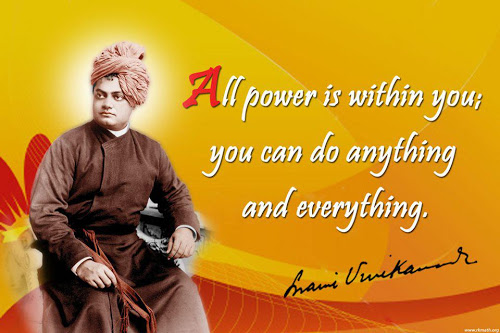
So dear youth leaders, embrace actions than words. It has more eloquence and nobility. Remember, even Vivekanada advised Karma Yoga or the Yoga of actions. Karma Yoga is a mental discipline which allows one to carry out one’s duties as a service to the entire world, as a path to enlightenment. . We have to work as hard as we can, give the work our best quality effort, then step back and let the results take care of themselves. Action purifies the soul.
Uttishthata jagrata prapya varan nibodhata Arise, awake and stop not till the goal is reached.
I- INTUITION
The third letter of pair is ‘I’ and it stands for Intuition. Intuition is a hunch or a gut feeling and if we followed it, we just might be happier. Intuition is the sound of the soul. We feel this intuition at unexpected moments and in periods of time set aside for silence. It is also very good at sending warning bells about people or events and if we listen it keeps us safe.
I came to Saudi Arabia on Nov 28th 1997. My flight to Chennai from Cochin was on 27th Nov . On 27th early morning at 2:30 AM, I received a call from my sister that my father, a cardiac patient, had been hospitalized and he had sunk into a coma. Early morning of 27th, I rushed to the hospital near Aleppey and saw there a crowd of my relatives. I went to the doctor’s home located near the hospital and asked his opinion about my father and told about my predicament of rushing to Airport in a couple of hours. The doctor said that he could tell anything positive only if his kidney started functioning. Consultations with my relatives only confused me. They wanted me to stay back as it wasn’t the right time to leave the country. I was in a dilemma. I moved away from them and went to the garden of the hospital. I stood near an almond tree for a while. I could hear some inner voice telling me that my father was going to survive. I told my relatives that I was leaving and asked my sisters to take care my father. On the morning of 28th, before boarding Saudia flight, I made a call to my sister from airport and she said that my father’s kidney had started functioning. My father lived another 18 months and I had the opportunity to visit him twice before he bid his final good bye.
Gabriel Garcia Marquez, Nobel Laureate, one of the greatest novelists of this century says in his memoir that everything he has done is based on intuition. Once he went for a dinner in a reputed restaurant. As he reached there, he saw in the restaurant an unfamiliar sitting pattern including some strangers dining there. He thought of not dining there and went back to another restaurant in the city. The next day he opened the Newspaper and read that many people who had dined in that restaurant he originally intended to dine, died of food poisoning. So your intuition can sometimes save your life.
I believe before you seek advice from anyone, you must seek advice from yourself. I believe that your inner voice seldom cheats you. Albert Einstein has said “The intuitive mind is a sacred gift and the rational mind is a faithful servant. We have created a society that honors the servant and has forgotten the gift.” You must train your intuitive mind – you must trust the small voice inside you which tells you exactly what to say, what to decide. Follow your instincts, that is where wisdom lies.
R- REMEMBERANCE
Humans are more inclined to forget than remember. Very often we forget both the people who have been with us in our journey and the events that transformed us. In a few years from now some of you may act as of you don’t know your YLP coordinator Azziz Siddique , our dynamic president Asif Siddique or DTM Safare Mohammed, the poster boy of Toastmasters. My request to youth leaders is to keep a good track of your accounts, especially your debts and remember to return it if situation demands it.
Again I return to a childhood incident when I was studying in the 7th grade. My grand uncle EK Nair, the father of Satish, has been my role model. During one of his vacations from Mumbai, he asked me to go with him for a walk. He wanted to meet his childhood buddy whose house was located about 3 KM from our home. His Name was Narayan Thirumeni , a Brahmin by birth. When my uncle studied for his B.Com, the only college available was SD college near Alleppey. Since my uncle’s dad had no means to make any hostel accommodation, Narayanan Thirumeni invited my uncle to stay and study with him at his ancestral home in Alleppey as they were then a prosperous family. After our long walk we reached Narayan Thirumeni’s house. The sight we saw gave a jolt to my uncle. Times had changed. Thirumeni and his wife had been living in a dilapidated house. His only son had vanished into some unknown terrain as a Naxalist. His daughter had run away with someone belonging to another caste. Apparently, they didn’t have means to offer us even a cup of tea. After a long chat, we left his home and during the walk I realized that my uncle was visibly upset. As we reached the village square, he straightway went to a grocery shop, gave a good sum, and instructed the shopkeeper to deliver to Thirumeni’s house Rice, Sugar and Tea for one year and said he would pay if there was any unsettled payment when he returned the following year.
Witnessing of this simple incident has never been erased my heart. I see it as an exemplary act of gratitude in remembrance of what he had received from that family almost 45 years ago when he was a student. I believe gestures of such genuine gratitude come from the heart.
As Emerson rightly said- “Cultivate the habit of being grateful for every good thing that comes to you, and to give thanks continuously. And because all things have contributed to your advancement, you should include all things in your gratitude”. Let gratitude be the pillow upon which you kneel to say your nightly prayer. The great Roman Orator Cicero has said –“Gratitude is not only the greatest of virtues, but the parent of all others.”
Dear Youth leaders, that concludes my PAIR speech
In a few years from now you are going to face the brave new world. Many things may not turn out as you have dreamt. Your ship may not come. You may not win mega buck lotteries. You may not become a flashy Software Engineer in Infosys. You may not win formula 1 car race. No one will give the key to a new city, and even if they did, it may not open even a can of cat food. You may get good jobs and bad ones. You may meet Mr Right or Miss Wrong as your partners in life. A few minutes from now a speech contest among you is going to take place. Some of you may win and some of you may lose. I am telling everything you don’t know about this life.
I am not being cynical here. Despite all these, If you stay positive and govern your actions based on intuition and remember to pay your debts in your journey, you may excel in your life. Based on my experiences and my observation of others I can say with utmost honesty that like in Hindi Movies happy endings are the rule rather than an exception.
Dear Youth Leaders, You are living in incredibly exciting times. Take your wings and fly. Let Global Toastmasters be the wind beneath your wings.






/Concisenessinwriting-5b7dc4b4c9e77c0025735d5b.png)








 pgrnair.com
