THE BEAUTIFUL DAY

THE BEAUTIFUL DAY

By Jean Follain ( French Minimalist poet)
Translated by Heather McHugh

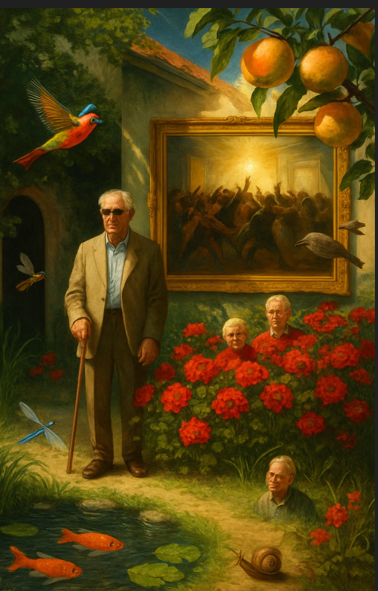
Insects and fish
move from the shade to the light
the fruit hangs still on the tree
brushed by the fine wing
of a flamboyant bird
then a dull one.
The blind man hardly thinks
of his missing eyes
in the garden of wine-red flowers.
Suddenly the sun in the drawing room
lights a large painting that shows
rioters surging wildly into sight.

A delicate and layered poem, “The Beautiful Day” uses serene imagery and subtle shifts in tone to reflect on how easily tranquility can be shadowed by unseen violence or remembered suffering. It unfolds with a deep awareness of contrast—between serenity and disturbance, the visible and the hidden, nature and human turmoil. It’s a meditation on the fragility of peace and the haunting presence of what lies beyond the beautiful moment.

By moving from a garden’s quiet details to a painting of rioters lit up indoors, the poem subtly asks us about what we see, what we miss, and how sudden revelations (of violence, of reality) change the character of a peaceful day. It’s a poem about beauty and disturbance, perception and ignorance, outer calm and inner turmoil.

Heather McHugh in her introduction says the following about the poem:

“And in “The Beautiful Day,” the aristocratic idleness of the garden (appearing for all the world—*brushed,” posed—like the subject of a more romantic art) is disturbed by the image of the insurgent mob in a living-room painting. Which is more alive, more real? We feel we know. We know we feel. Still, the man in the garden is blind. The seer is present in these poems not as the fashionably poetic first person but rather as the subverted designer of the seen. We, the readers, have a place here too. Is it we who lull, senseless, in the garden of the decorative, blind to the blood in the living room? The poem s both subject and object here.”

Source : D’Apres Tout: Poems by Jean Follain. Image created using AI)
TABLE

Table
by EDIP CANSEVER (Turkish Poet)
translated by Julia Clare Tillinghast and Richard Tillinghast

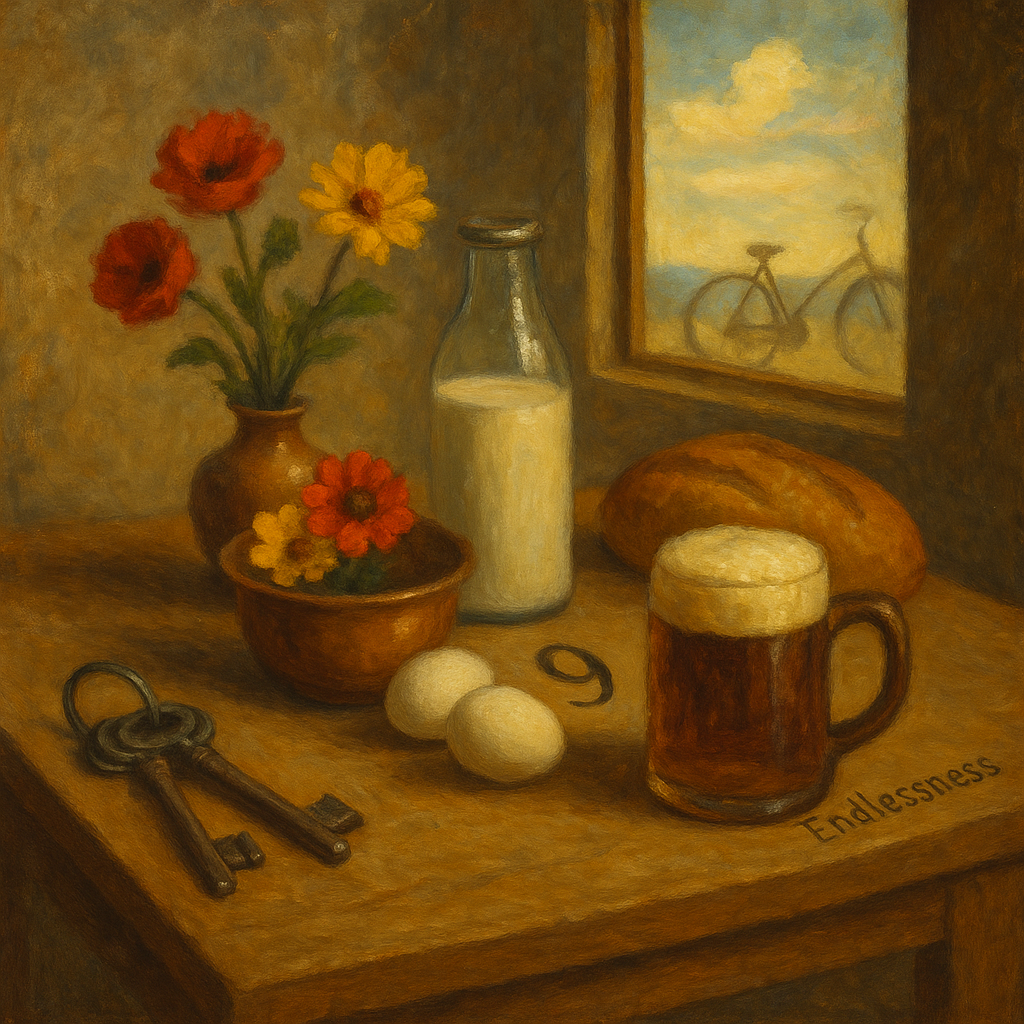
A man filled with the gladness of living
Put his keys on the table,
Put flowers in a copper bowl there.
He put his eggs and milk on the table.
He put there the light that came in through the window,
Sound of a bicycle, sound of a spinning wheel.
The softness of weather and bread he put there.
On the table the man put
Things that happened in his mind.
What he wanted to do in life,
He put that there.
Those he loved, those he didn’t love,
The man put them on the table too.
Three times three make nine:
The man put nine on the table.
He was next to the window next to the sky;
He reached out and placed on the table endlessness.
So many days he had wanted to drink a beer!
He put on the table the pouring of that beer.
He placed there his sleep and his wakefulness;
His hunger and his fullness he put there.
Now that’s what I call a table!
It didn’t complain at all about the load.
It wobbled once or twice, then stood firm.
The man kept piling things on.

From Dirty August: Poems by Edip Cansever, translated by Julia Clare Tillinghast and Richard Tillinghast Jersey City, NJ: Talisman House, 2009

This fascinating poem is a poetic listing — a catalogue of the self. The act of putting things on the table becomes a ritual of unburdening, of both confession and celebration. It starts with piling up of essentials that brought joy to the poet’s life. The table soon becomes a microcosm of a life — joys, regrets, hunger, memory, love, rejection, longing — all coexist. I believe everyone has such a table.

Edip Cansever’s poem “Table” is a deeply evocative and symbolic celebration of life, memory, and the human experience — all unfolding on a simple, unassuming piece of furniture: a table. With deceptive simplicity and a meditative rhythm, Cansever turns a household object into a repository of emotion, desire, thought, and even the metaphysical.

The poem uses free verse, lending it a conversational tone, almost like a stream of consciousness. The repetitive phrase “he put” creates a rhythm and builds a cumulative effect — each object placed on the table adding to the complexity of the speaker’s inner and outer worlds. The tone is reflective, sometimes playful, but increasingly profound as abstract ideas begin to mingle with physical things. There’s a quiet reverence toward the ordinary, transforming the mundane into something sacred.

Cansever begins with concrete, everyday items:“Put his keys on the table, / Put flowers in a copper bowl there.” As the poem progresses, he layers sensory perceptions (“light,” “sound”), then moves into the intangible:“Things that happened in his mind… / What he wanted to do in life.” Eventually, the poet arrives at the cosmic — placing “endlessness” itself on the table. This evolution from the simple to the sublime echoes human consciousness and our natural tendency to attach meaning to the ordinary.

Edip Cansever’s “Table” is a meditative marvel — a still life that moves. The poem does not preach or dramatize but simply places before us the quiet abundance of living. In its simplicity lies its profundity. The final image — of the table, firm despite its load — becomes a poetic monument to human resilience, memory, and the art of noticing. This is a poem that doesn’t ask to be analysed so much as inhabited, much like the table itself — inviting us to place our own “pouring of beer,” our “softness of bread,” and our “endlessness” on it, and see how it holds.

What would your table be?