
THE BEAUTIFUL DAY
By Jean Follain ( French Minimalist poet)
Translated by Heather McHugh
Insects and fish
move from the shade to the light
the fruit hangs still on the tree
brushed by the fine wing
of a flamboyant bird
then a dull one.
The blind man hardly thinks
of his missing eyes
in the garden of wine-red flowers.
Suddenly the sun in the drawing room
lights a large painting that shows
rioters surging wildly into sight.
A delicate and layered poem, “The Beautiful Day” uses serene imagery and subtle shifts in tone to reflect on how easily tranquility can be shadowed by unseen violence or remembered suffering. It unfolds with a deep awareness of contrast—between serenity and disturbance, the visible and the hidden, nature and human turmoil. It’s a meditation on the fragility of peace and the haunting presence of what lies beyond the beautiful moment.
By moving from a garden’s quiet details to a painting of rioters lit up indoors, the poem subtly asks us about what we see, what we miss, and how sudden revelations (of violence, of reality) change the character of a peaceful day. It’s a poem about beauty and disturbance, perception and ignorance, outer calm and inner turmoil.
Heather McHugh in her introduction says the following about the poem:
“And in “The Beautiful Day,” the aristocratic idleness of the garden (appearing for all the world—*brushed,” posed—like the subject of a more romantic art) is disturbed by the image of the insurgent mob in a living-room painting. Which is more alive, more real? We feel we know. We know we feel. Still, the man in the garden is blind. The seer is present in these poems not as the fashionably poetic first person but rather as the subverted designer of the seen. We, the readers, have a place here too. Is it we who lull, senseless, in the garden of the decorative, blind to the blood in the living room? The poem s both subject and object here.”
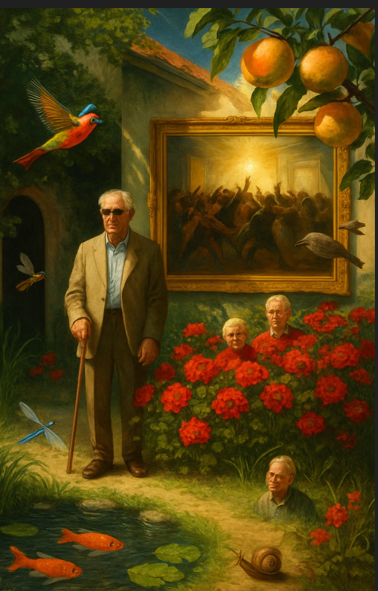
Source : D’Apres Tout: Poems by Jean Follain. Image created using AI)
 pgrnair.com